The holidays are busy, but they are also the perfect moment to set up a clean lane into tax season. You do not need to memorize tax code. You need a simple system and clarity on what to save.
The following guide is general information for homeowners in Rochester and a prompt list for your tax professional. Use it to gather the right records, capture potential credits, and avoid the April scramble.
1) Build a One Folder System You Will Actually Use
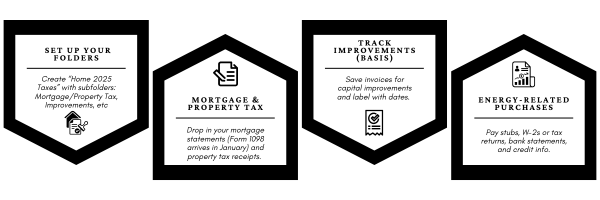
Create a top level folder titled Home 2025 Taxes. Inside it, create subfolders labeled clearly so anyone in the household can file documents correctly.
Suggested subfolders
• Mortgage and Property Tax including Form 1098 and tax bills or receipts
• Improvements including invoices for capital projects
• Energy Credits including receipts, manufacturer information, and installation dates
• Insurance and Permits including claim letters, permits, and final inspections
• Charity including donation receipts
• Home Office including any qualifying documentation
If you prefer paper, mirror the same setup in an accordion file.
2) Mortgage Interest, Points, and Property Taxes
Expect Form 1098 in January and drop it into your folder the moment it arrives. If you paid points to buy down your rate, save the closing disclosure. Property tax receipts belong in this same section. Ask your tax professional whether paying a portion of your taxes before December thirty one benefits you. This depends on whether you itemize and how the current SALT limits affect you.
3) Track Improvements to Protect Your Basis
Not every expense is deductible, but many capital improvements increase your cost basis and can reduce potential taxable gain when you sell. Keep invoices for roofs, windows, doors, HVAC systems, insulation, additions, major landscaping hardscapes, and any permitted project. Note the date, contractor, scope of work, and save copies of permits and final inspections. Routine maintenance can be placed in its own folder labeled clearly so you do not mix categories later.
4) Energy Efficiency Credits
If you installed qualifying efficiency upgrades such as heat pump HVAC, insulation, or certain windows and doors, save the following:
• The invoice with model information
• The installation date
• Any manufacturer certification or product label
Credits often rely on very specific equipment details. A one page summary that lists what you installed will help your tax professional determine eligibility quickly.
5) Home Office Rules
If you regularly and exclusively use a space for work, speak with your tax professional about the simplified method which uses a square foot allowance or the actual expenses method which allocates utilities, insurance, and depreciation. If you use actual expenses, keep power, gas, water, internet bills, and home insurance statements in your Home Office folder. If the space is not exclusively used for work, it likely does not qualify, so do not guess.
6) Charitable Gifts and Medical Costs
If you itemize, gather receipts for cash donations and donated goods with reasonable fair market value. For medical deductions, large out of pocket expenses can matter. Save invoices for procedures, prescriptions, and relevant insurance statements. Even if you take the standard deduction, keep donation records for planning purposes.
7) Insurance, Permits, and Major Repairs
If you filed a storm claim, keep adjuster letters and contractor invoices together. For any project requiring a permit, save the permit, the final approval, and any warranty paperwork. Appraisers and future buyers appreciate organized documentation and so will you.
8) Rental or Short Term Rental Records
If you rent a room, a unit, or operate a short term rental, maintain entirely separate books.
Keep the following:
• Income and expense records
• Platform fees, supply costs, utilities you cover, maintenance, and mileage
• A log of nights rented versus personal use
• Form 1099 K or platform statements
Accurate books make tax preparation smoother and support your agent when positioning the property for resale with credible income documentation.
9) January Playbook
Set calendar reminders to watch for:
• Form 1098 from your lender or lenders
• Form 1099 from platforms or financial institutions
• The organizer from your tax professional
• Final year end statements including insurance, escrow, and HOA
Download each item and drop it into your folder as it arrives. The sooner your organizer is complete, the sooner you enter your tax professional’s queue.
10) Three Smart Questions to Ask Your Tax Professional
• Given my situation, do I benefit from itemizing this year
• Which of my two thousand twenty five improvements qualify for credits and what proof do you need
• Is there anything I should complete before December thirty one rather than waiting until January
Bottom Line
You do not need to become a tax expert. Your job is simply to manage your records. Create one folder, save the right receipts, and keep clear details for improvements and energy related upgrades. Pair that with a few targeted questions for your tax professional and April becomes a straightforward checklist instead of a last minute scramble.